
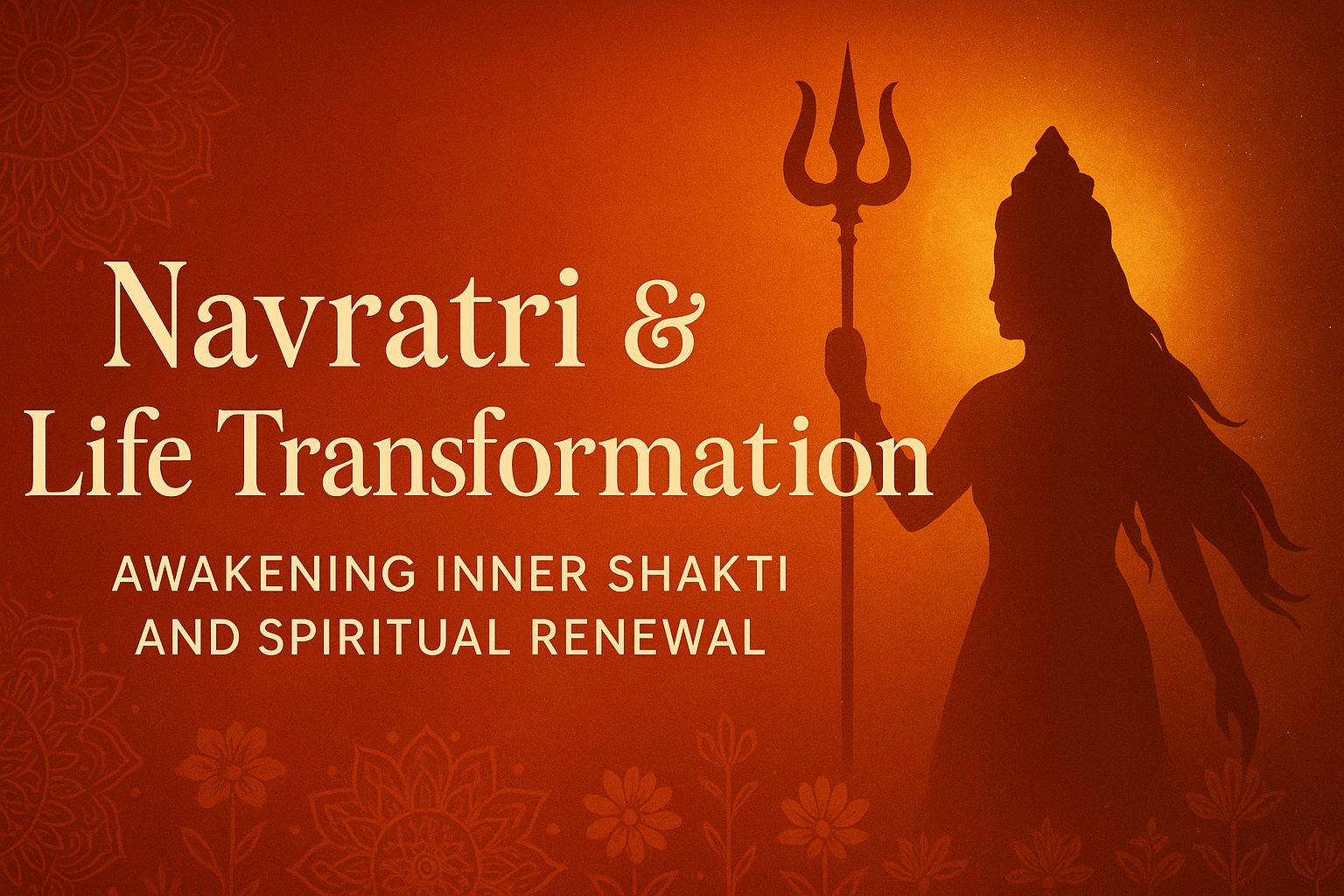
Navratri, also called Navratri, is one of the most significant and spiritually powerful festivals in the Hindu tradition, dedicated to the worship of the Goddess Durga in her nine divine forms. The word “Navratri” comes from the Sanskrit “Nav” (nine) and “Ratri” (night), meaning “nine nights.” It is celebrated twice a year, during the change of seasons—Chaitra Navratri (March–April) in spring and Sharad Navratri (September–October) in autumn. Both periods mark a strong shift in solar and lunar energies, making them auspicious for spiritual practices, inner purification, and worship.
Importance of Navratri
Of course. The importance of Navratri is far deeper than just being a festival of worship and celebration; it is a profound spiritual discipline, a cosmic alignment of energies, and a reminder of the eternal victory of dharma (righteousness) over adharma (unrighteousness). Below is a detailed elaboration on its importance from cultural, spiritual, psychological, and even health perspectives:
- Victory of Good over Evil
The central importance of Navratri lies in the symbolic victory of Goddess Durga over the demon Mahishasura. Mahishasura represents uncontrolled desires, arrogance, and negative tendencies within human nature, while Durga embodies divine Shakti—the energy that protects righteousness. The festival teaches that, however strong evil forces may appear, divine truth and inner purity ultimately prevail. The tenth day, Vijayadashami (Dussehra), marks this victory and inspires devotees to believe in justice, morality, and truth.
- Awakening of Inner Shakti (Energy)
Navratri is dedicated to the worship of Shakti, the divine feminine energy that sustains the universe. The importance of worshiping this energy is to remind human beings that they, too, are fragments of this infinite Shakti, and through devotion and discipline, they can awaken their dormant inner powers. Spiritually, the nine days represent a progressive awakening of energy within the human being, leading from tamas (inertia) to rajas (action) to sattva (purity). By the end of Navratri, a devotee is spiritually recharged and ready to face life with renewed strength.
- Purification of Body and Mind
The fasting and dietary restrictions during Navratri are not arbitrary but rooted in both spiritual and scientific wisdom. At the seasonal junctions (spring and autumn), the body becomes prone to imbalances and illnesses. Fasting on fruits, light meals, and sattvic food helps detoxify the system, balance digestion, and strengthen immunity. Mentally, fasting reduces restlessness, sharpens concentration, and makes the mind more receptive to spiritual vibrations. Thus, Navratri acts as a holistic purification ritual that synchronises physical health with spiritual growth.
- Self-Discipline and Inner Transformation
The nine days are an opportunity for devotees to practice Vrata (fasting/discipline) through fasting, chanting, meditation, and abstinence from negative habits. Each day is dedicated to one form of the Goddess, symbolizing a step in self-transformation—developing patience, courage, compassion, wisdom, clarity, and purity. This discipline transforms a person’s inner world, gradually helping them to overcome the “inner demons” of ego, anger, greed, jealousy, lust, and attachment.
- A Time for Devotion and Spiritual Practices
Navratri is considered one of the most powerful periods for spiritual practices. Reading the Durga Saptashati, chanting mantras like “Ya Devi Sarvabhuteshu,” or meditating on the Goddess greatly amplifies inner vibrations. Scriptures say that during Navratri, the spiritual merit (punya) obtained from worship multiplies manifold compared to normal days, because cosmic and divine energies are at their peak. This makes it the most auspicious time to begin new sadhanas, mantra initiations, or charitable deeds.
- Strengthening of Family and Social Bonds
On a cultural level, Navratri strengthens family ties and community bonds. Families gather for rituals, communal prayers, jagrans, and garba dances. Sharing devotion and joy brings unity and harmony. Women are especially honoured during this festival, symbolizing respect for the divine feminine present in every mother, sister, and daughter. In many regions, little girls (Kumaris) are worshiped on the eighth or ninth day, acknowledging that divine Shakti resides in them. This fosters a culture of reverence and balance in society.
- Renewal of Hope and Positivity
Navratri comes at the seasonal junctions—spring brings new life after winter, and autumn brings harvest after monsoon. Both are times of transition, and transitions often bring uncertainty. Navratri serves as a spiritual anchor during these times, reminding people of renewal, hope, and the cyclical nature of life. Just as the Goddess defeats the demon, every individual is reminded that their struggles, too, will pass, and light will eventually conquer darkness.
- Universal Relevance
While rooted in Hindu tradition, the importance of Navratri carries universal spiritual lessons. It is a festival of self-conquest, inner renewal, and awakening higher consciousness. The battle of Durga and Mahishasura is not just a mythological but a psychological metaphor for every human being’s struggle between higher aspirations and lower tendencies. Thus, the importance of Navratri transcends cultural boundaries and resonates with anyone walking the path of spiritual evolution.
Spiritual Significance of Navratri
The spiritual significance of Navratri goes far beyond rituals, fasting, and celebration—it is a deeply transformative period that symbolizes the soul’s journey from ignorance to wisdom, from weakness to strength, and from bondage to liberation. Every element of Navratri carries a symbolic meaning that reflects profound truths about human life and spiritual evolution. Below is a detailed elaboration:
- Awakening of Shakti – The Universal Energy
At the heart of Navratri lies the worship of Shakti, the divine feminine energy that is the source of creation, preservation, and destruction. Spiritually, Shakti represents the infinite potential within every human being to rise above limitations and manifest divine strength. Worshipping Durga in her nine forms symbolizes awakening this dormant energy in stages, until the seeker becomes spiritually powerful, balanced, and liberated. Navratri reminds us that without Shakti, the universe is lifeless, and without awakening inner Shakti, the human soul remains weak and bound by ignorance.
- Inner Battle – Defeating the Demons Within
The story of Goddess Durga slaying Mahishasura is not just mythological but also psychological and spiritual. Mahishasura represents the lower instincts—ego, arrogance, lust, greed, and attachment—that enslave the human soul. The nine nights of Navratri symbolize the ongoing inner battle every seeker must fight against these inner enemies. Each form of the Goddess provides a spiritual lesson and strength to overcome a particular weakness. The victory on the tenth day, Vijayadashami, symbolizes the triumph of the higher self (Atman) over the lower self (ego).
- The Journey from Tamas to Sattva
Spiritually, Navratri represents the soul’s journey through the three gunas (qualities of nature):
- First three days (Tamas): Worship of Durga in her fierce forms (Shailputri, Brahmacharini, Chandraghanta) helps destroy inertia, laziness, fear, and ignorance.
- Next three days (Rajas): Worship of the creative and protective forms (Kushmanda, Skandamata, Katyayani) refines action, energy, and passion, channelling them toward positive goals.
- Final three days (Sattva): Worship of the purifying forms (Kalaratri, Mahagauri, Siddhidatri) elevates the soul to purity, wisdom, and divine realization.
This progression shows that Navratri is not just a festival but a structured spiritual discipline to rise above the cycles of negativity and align with the divine.
- Purification of Mind, Body, and Soul
Spiritual significance also lies in the purification process that Navratri brings:
- Body: Fasting purifies the body by eliminating toxins, making it fit for spiritual practice.
- Mind: Mantra chanting, meditation, and prayer calm restlessness and develop concentration.
- Soul: Devotion and surrender to the Goddess remove karmic impurities and create alignment with higher consciousness.
Thus, Navratri is a holistic purification ritual that touches every layer of existence.
- Symbol of Feminine Divinity and Balance
On a spiritual plane, Navratri reaffirms the sacredness of the feminine principle in the universe. Shakti is the power behind all creation, without which even Shiva (pure consciousness) remains inactive. Spiritually, this teaches balance—between masculine and feminine, consciousness and energy, thought and action. Honouring the Goddess means honouring balance in our own lives, and recognizing that spiritual progress requires both awareness (Shiva) and energy (Shakti).
- Multiplier Effect of Sadhana
Scriptures emphasize that spiritual practices during Navratri—like chanting, meditation, and reading texts such as the Durga Saptashati—yield manifold results compared to ordinary days. This is because cosmic energies align in a way that opens subtle channels within the body (Nadis and chakras). Spiritually, this is a window of opportunity when the veil between the material and spiritual worlds becomes thinner, allowing seekers to experience deeper meditation and divine connection.
- Path to Liberation (Moksha)
Ultimately, the spiritual significance of Navratra lies in guiding the soul toward moksha—freedom from ignorance and rebirth. The nine forms of Durga symbolize different virtues and powers needed for liberation: faith, self-discipline, courage, compassion, clarity, wisdom, and detachment. By worshiping and imbuing these qualities, a devotee moves closer to self-realization. The tenth day (Vijayadashami) is the day of victory not just for the Goddess but also for the soul, which has conquered illusions and realized its divine essence.
- The Cosmic Cycle of Creation
Navratra also reflects the cosmic process of creation. The universe itself was manifested through Shakti, and every cycle of creation, sustenance, and dissolution follows the rhythm of her energy. Spiritually, observing Navratra aligns the individual with this universal cycle, reminding us that life is not random but divinely orchestrated, and that surrendering to cosmic order brings peace and liberation.
Astrological Connection of Navratra
Absolutely. The astrological connection of Navratra is profound because this period is not just a religious observance but also a time when cosmic energies, planetary alignments, and lunar phases intensify spiritual vibrations and directly affect human life. Here’s a deeper explanation:
- Timing and Cosmic Energy
Navratra begins on the first day (Pratipada) of the bright lunar fortnight (Shukla Paksha) after Amavasya, in the months of Chaitra (March–April) and Ashwin/Sharad (September–October). Both times occur when the Sun is changing signs (Sankranti) and the Moon is waxing, creating a powerful surge in cosmic energy. This shift symbolizes new beginnings, purification, and heightened spiritual receptivity. Astrologically, the waxing Moon is considered auspicious for spiritual practices, as the mind (Moon) expands and becomes receptive to divine vibrations.
- Navratra and Planetary Balance (Navagrahas)
The nine forms of Goddess Durga (Navdurga) are linked with the nine planets (Navagrahas) in Vedic astrology. Each day of Navratra corresponds to a Goddess who governs or harmonizes a specific planetary force. Worshipping her not only strengthens the favourable effects of that planet but also pacifies its malefic influences.
- Day 1 – Shailputri (Moon): Governs emotional stability, peace of mind, and nurturing qualities. Pacifies Moon-related afflictions like depression, anxiety, or instability.
- Day 2 – Brahmacharini (Mars): Represents energy, discipline, and courage. Worship helps balance Martian energy, reducing aggression, impulsiveness, or blood-related disorders.
- Day 3 – Chandraghanta (Venus): Symbolizes harmony, beauty, and marital happiness. Worship strengthens Venus, removing conflicts in relationships and enhancing material comfort.
- Day 4 – Kushmanda (Sun): Source of vitality, confidence, and leadership. Her grace stabilizes solar energy, reducing ego, arrogance, and health issues related to the heart.
- Day 5 – Skandamata (Mercury): Governs wisdom, communication, and intellect. Her blessings enhance learning ability and heal Mercury afflictions like nervousness or speech problems.
- Day 6 – Katyayani (Jupiter): Represents divine knowledge, righteousness, and dharma. Worship removes Guru dosha, improves spiritual growth, marriage prospects, and wisdom.
- Day 7 – Kalaratri (Saturn): Fierce form destroying negativity and fear. Helps overcome Shani’s malefic effects like delays, struggles, and karmic burdens.
- Day 8 – Mahagauri (Rahu): Symbol of purity and clarity. Her worship neutralizes Rahu’s illusions, addictions, and confusion, aligning one with truth.
- Day 9 – Siddhidatri (Ketu): Grants supernatural powers, intuition, and liberation. Balances Ketu’s energy, removing detachment issues, confusion, and spiritual blockages.
Through this mapping, Navratra becomes a spiritual-astrological remedy that aligns the human microcosm (body, mind, soul) with the cosmic macrocosm (planets, stars, universe).
- Fasting and Planetary Remedies
The fasting observed during Navratra is not only a spiritual discipline but also an astrological remedy (Upaya). By avoiding grains and adopting sattvic foods, the body becomes light, the mind clear, and planetary influences subtle. Different foods, colours, and offerings associated with each day strengthen planetary energies. For example, wearing white on Day 1 (Moon), red on Day 2 (Mars), or yellow on Day 6 (Jupiter) aligns one’s aura with planetary vibrations.
- Cosmic Rhythms and Seasonal Shifts
Both Navratri fall at the junctions of seasons—spring (Vasant Ritu) and autumn (Sharad Ritu). According to Ayurveda and Jyotish, these junctions are times when the body and mind become vulnerable to planetary disturbances. Spiritual practices during these periods act like a shield, balancing internal energies with external cosmic shifts.
- Astrological Benefits of Navratra Sadhana
- Reduces the malefic effects of planetary doshas such as Shani dosha, Rahu-Ketu afflictions, Manglik dosha, and Pitra dosha. Strengthens the Lagna (ascendant) by harmonizing planetary vibrations, leading to better health and destiny control. Enhances spiritual growth, career stability, marital harmony, and protection from negative energies. Provides an opportunity to start new ventures, as planetary alignments during this time are naturally auspicious.
In Essence
Navratra is not just about worshipping the Goddess externally but about synchronizing the self with the universe. The nine forms of Durga correspond to the nine planets, and through their worship, humans align with cosmic rhythms, neutralize astrological afflictions, and draw spiritual as well as material blessings. This is why astrologers often suggest initiating remedies, mantras, or spiritual practices during Navratra—it acts as a powerful reset point where planetary energies and divine Shakti converge.