
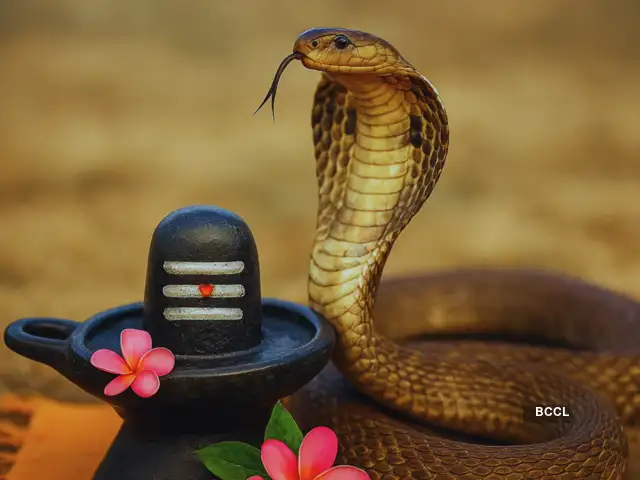
Today, 29th July 2025, marks the auspicious occasion of Naag Panchami, a festival dedicated to the serpent deity (Naag Devta), observed on the fifth day of the Shukla Paksha in the lunar month of Shravan. In Sanatan Dharma, this day holds deep spiritual significance, believed to bestow blessings of fertility (as infertility is often seen as a result of a serpent’s curse), protection from snakes, ancestral blessings, spiritual evolution, and relief from astrological afflictions like Kaal Sarp Dosha.
In Hindu tradition, Takshaka—the cobra—is revered as the king of serpents. Snakes are worshipped as divine beings, believed to embody spiritual power and mystical knowledge. The festival commemorates the intervention of Rishi Astika, who halted a sacrificial ritual intended to annihilate the Naga race. This day is celebrated in honor of his act of peace and wisdom.
Nagas, depicted as divine serpents, symbolize hidden wisdom, protection, and the awakening power of Kundalini—the spiritual energy believed to reside coiled at the base of the spine. As this energy rises through the chakras during spiritual practices, it brings about a transformative journey toward higher consciousness. Just as a serpent sheds its skin, spiritual seekers shed old beliefs and patterns, symbolizing rebirth and inner growth.
Naga kings like Padma are associated with the propagation of Dharma and deep spiritual insight, while figures like Rishi Astika, born from a human and Naga union, represent the union of human understanding with divine knowledge. These beings are considered guardians of sacred truths and cosmic mysteries, guiding aspirants on their spiritual paths.
Astrologically, Nagas are strongly connected to the lunar nodes—Rahu and Ketu—shadow planets in Vedic astrology. Their placements can lead to conditions like Naga Dosha or Sarpa Dosha, believed to bring challenges in life due to a serpent’s karmic influence. These afflictions are especially noted when Rahu or Ketu are placed in critical houses (1st, 2nd, 4th, 5th, 7th, or 8th), or are in conjunction with the Moon or Venus. Remedies are often prescribed to appease these energies.
Furthermore, Nagas have a profound influence on Gandmool Nakshatras—specific lunar constellations. Natives born under these stars often exhibit sharp intellect, deep analytical abilities, and the capacity to penetrate complex realities. Their mental prowess is seen as a reflection of the serpent’s discerning wisdom.
Naag Panchami, thus, is more than a ritualistic observance—it is a celebration of transformation, protection, wisdom, and the eternal connection between the earthly and the divine.
In Hindu astrology, the presence and influence of Nagas—reflected through the planetary positions of Rahu and Ketu—are considered highly significant. Their placements in the horoscope are closely analyzed, and various rituals and remedies are undertaken to neutralize negative effects while seeking the blessings of these powerful serpent deities. Each month of the year is associated with a specific Naga, and worshipping them is believed to elevate one’s consciousness and support progress on the spiritual path. The monthly associations are: Chaitra (Vasuki), Vaishakha (Kachnira), Jyeshtha (Takshaka), Ashadha (Shukra), Shravana (Elaptara), Bhadrapada (Shankhala), Ashwin (Kambala), Kartika (Asvatara), Margashirsha (Mahashankha), Pausha (Karkotaka), Magha (Dhananjaya), and Phalguna (Airavata).
Nagas are believed to possess the unique power to dissolve karmas stored in the underworld realms (Talas or Narakas). As such, their influence can bring to the surface deeply buried karmic patterns or psychological wounds, offering both challenges and profound opportunities for healing and spiritual liberation.
Remedial Measures for Naag Panchami:
To seek the favor of the Nagas and mitigate their malefic effects (such as those seen in Naga Dosha or Kaal Sarp Dosh), specific rituals and practices are recommended. Donating black items like sesame seeds, black cloth, or blankets to the poor is considered auspicious. Recitation of sacred mantras such as “Om Naga Devaya Namah” and “Ananta Sarpaaya Namah” is believed to invoke their divine protection and grace.
Worship of Lord Shiva—who wears the serpent Vasuki around his neck—is integral, as he governs planetary energies and bestows spiritual equilibrium. Rituals like Sarpa Samskara, Ashlesha Bali, and Naga Prathistha are traditionally performed to pacify serpent energies and balance astrological afflictions. Devotees also offer milk, water, cardamom, cloves, nutmeg, and sweets made from barley flour to Naga idols or anthills where serpents are believed to reside.
Visiting sacred temples dedicated to Naga deities, such as Kukke Subramanya and Ghati Subramanya, is a common spiritual observance. These acts of devotion must be carried out with deep reverence, recognizing that Nagas are not merely mythological beings but cosmic forces aligned with destiny and transformation. Additionally, praying to Lord Krishna—especially on Saturdays or Panchami tithis—is another powerful way to seek relief from Kaal Sarp Dosh and receive divine guidance.
Happy Naag Panchmi
29th July, 2025
Kuldip Sareen
July 30, 2025 at 6:47 am
Informative and nicely Explained ????